The Power of Belief in Your Marriage
Mark learned early that honesty could be dangerous. Growing up in a home where his father's anger was unpredictable, he became skilled at telling people what they wanted to hear. White lies. Half-truths. Omissions. Outright lies. It was a survival strategy, and for years it worked.
He brought it into our marriage. When Dawna asked whether she looked nice, whether he remembered a phone call, whether he had finished the leftovers, Mark gave her the answer most likely to keep the peace. "I would never lie about anything important," he told her.
But for Dawna it meant our marriage was off-kilter. She could never quite trust what she heard. And without the ability to believe Mark about all the little everyday things that make up our lives together, it was hard to live out a loving life together.
Belief is essential for love. This Sunday's Gospel offers one of the most familiar passages in Christian Scripture, yet its implications for marriage are often overlooked. God's love for the world is active, sacrificial, and rooted in belief. But the love Jesus models requires cooperation, and cooperation requires belief.
Belief in marriage does not just involve everyday truths. There are two other interconnected forms of belief that are even more important. The first is believing in your spouse's potential. The second is building your life together on shared values that matter to both of you.
Believing in Your Spouse's Potential
The most important belief a spouse can have in their marriage is a belief that their spouse can change, can grow, and can still become the best versions of themselves.
When we choose to see our spouse as someone capable of growth rather than fixed in their flaws, something shifts in the relationship. This is not naïve optimism. It is a deliberate posture that shapes how we speak to one another, how we respond during conflict, and how we support each other through failure.
Psychologists call this the "Michelangelo phenomenon." It's named for the great Renaissance sculptor, who once claimed his true art was not shaping the marble, but freeing the figure he could see within it with his artistic vision.
Who do you see within your spouse? Research has found that when partners consistently see and affirm each other's ideal self — that person each aspires to become — their relationship satisfaction and their personal well-being increase. Your spouse is not a finished project. Treating them as someone still becoming is one of the most meaningful things you can offer.
Believing in their potential is not the same as ignoring real problems. It means holding problems and possibility at the same time. It also means resisting the pull toward contempt. When we catalog our spouse's shortcomings, we erode the trust that growth requires.
The Strength of Shared Beliefs
The second crucial form of belief in marriage is shared beliefs. Shared beliefs go beyond liking the same TV shows, or agreeing on politics. They include your values around honesty, how you want to raise your children, what you believe about money and generosity, and how you understand your responsibilities to others.
Couples who cultivate alignment in these areas build a foundation that can hold the weight of hard seasons.
This does not mean spouses must be identical in temperament or opinion. Differences in personality and perspective can enrich a marriage. But when core values diverge significantly, conflict tends to deepen and distance grows. Naming and nurturing shared beliefs is ongoing work as partners grow and change over the years.
An Activity to Try: The Shared Values Conversation
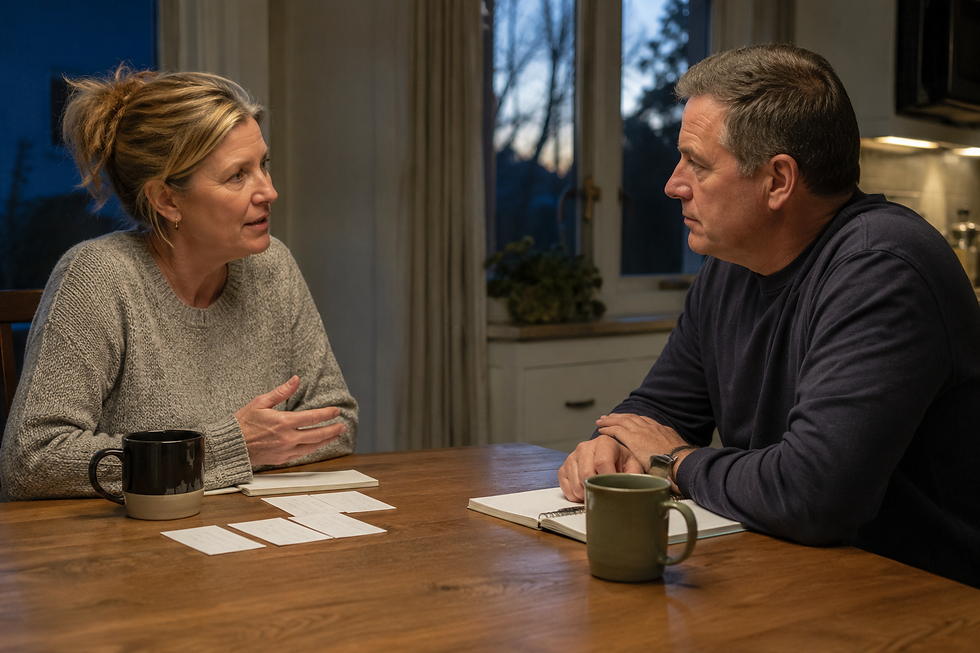
Here's a short activity to open an honest discussion about shared values:
Set aside 30 minutes with your spouse, away from screens and distractions.
Each of you independently writes down five values you consider central to your life and your marriage — things like faith, honesty, generosity, or family.
Then compare your lists. Discuss where you overlap, where you differ, and what those differences mean to each of you.
The goal is not agreement on everything, but understanding. Many couples find this conversation opens territory that the pace of daily life keeps closed.
Closing Reflection
Our marriage is founded on shared values much more than it is on shared interests or personality. One of those values was honesty--but being truthful meant different things to each of us.
Dawna learned early that she could not always believe Mark's explanations when he was trying to avoid angering or upsetting her. She did believe that he could change. And over the years he did. Bit-by-bit he became more straightforward about sharing things even when he knew she wouldn't like his answers. It took time, discussion, some fights, and the need for Mark to learn to believe that Dawna's momentary anger over small things was not going to have a lasting effect on their marriage.
Believe in your spouse's capacity to grow. Build your life on shared values. These are not small things. They are the architecture of a marriage that lasts.


Comments